

Pesticide Application Adjuvants for Plant Protection UAVs

Pesticide Application Adjuvants for Plant Protection UAVs
Enhancing Aerial Spraying Efficiency and Crop Safety
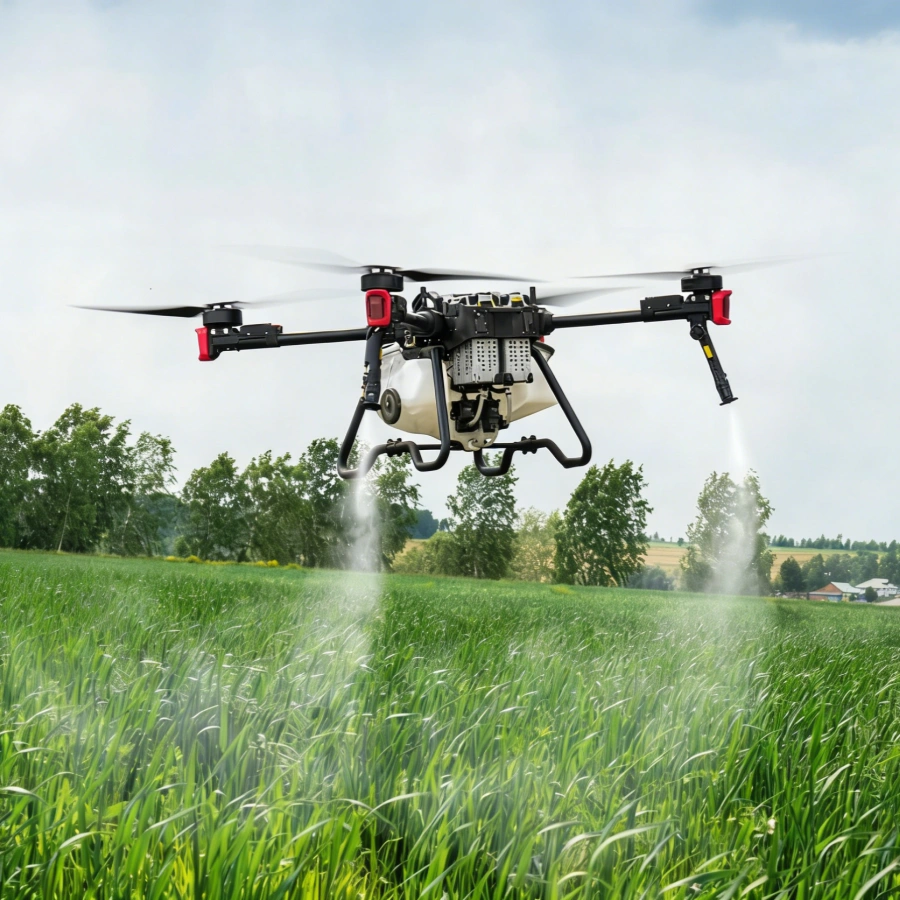
The rapid development of agricultural drone technology has significantly improved modern farming practices. Among these technologies, Plant Protection UAVs have become an essential tool for precise pesticide application. However, aerial spraying presents challenges such as droplet drift, rapid evaporation, and uneven deposition.
To address these issues, pesticide application adjuvants are widely used to optimize droplet behavior, improve pesticide performance, and reduce phytotoxicity risks during aerial operations.
What Are Pesticide Application Adjuvants?
Pesticide application adjuvants refer to auxiliary materials added to spray solutions, excluding active ingredients. In aerial operations involving Plant Protection UAVs, environmental factors such as flight height, wind speed, temperature, and humidity can significantly affect droplet stability.
Without proper regulation, spraying may result in:
Droplet drift
Rapid water evaporation
Reduced deposition efficiency
Crop injury due to uneven concentration
By adding appropriate adjuvants, droplet size, spreading ability, and evaporation rate can be effectively controlled, ensuring better spray performance.
I. Classification of Pesticide Application Adjuvants
Adjuvants used in aerial pesticide spraying can be classified by chemical composition or by functional role. These classifications are particularly important for systems operated by Plant Protection UAVs in open-field environments.
1. Classification by Chemical Category
Surfactant-Based Adjuvants
Surfactant-based adjuvants are typically composed of organosilicon compounds. These materials significantly reduce surface tension, allowing droplets to spread rapidly across plant surfaces.
Key benefits include:
Improved wetting and spreading
Increased droplet deposition
Enhanced permeability through leaf stomata
However, they offer limited anti-drift performance and are often combined with other types of adjuvants.
Polymer-Based Adjuvants
Polymer-based adjuvants are made from natural or synthetic polymers such as guar gum and polyacrylamide.
Main characteristics:
Increase spray liquid viscosity
Enlarge droplet size during atomization
Reduce formation of fine drift-prone droplets
Improve adhesion and deposition
They are especially useful in aerial spraying systems where drift control is critical for Plant Protection UAVs.
Vegetable Oil-Based Adjuvants
Vegetable oil-based adjuvants are produced from oils extracted from crops such as rapeseed and soybean.
Advantages include:
Strong affinity to hydrophobic leaf surfaces
Improved droplet adhesion and spreading
Formation of a protective film to slow evaporation
Enhanced penetration through the waxy leaf layer
These properties improve pesticide absorption efficiency in low-volume spraying systems.
2. Classification by Function
According to functional mechanisms, adjuvants can be categorized into the following groups:
Spreaders
Anti-drift agents
Evaporation inhibitors
Stickers
Penetrants
Synergists
Safeners
Absorbents
Spreaders
Spreaders enhance the wetting and distribution of spray liquid on plant surfaces. In crops with hydrophobic leaves, such as rice, improved spreading increases pesticide coverage and overall efficacy during UAV-based spraying.
Anti-Drift Agents
During operations conducted by Plant Protection UAVs, fine droplets (typically 50–100 microns) are highly susceptible to drift. Anti-drift agents reduce the formation of small droplets, slow evaporation, and improve droplet sedimentation.
Most anti-drift agents are polymer-based and are widely used in modern aerial spraying systems.
Evaporation Inhibitors
Evaporation inhibitors reduce droplet water loss during flight and after deposition. Since ultra-low-volume spraying produces highly dispersed droplets, controlling evaporation is essential to ensure that sufficient pesticide reaches the crop target.
Stickers
Stickers increase the adhesion of pesticide particles to plant leaves or insect surfaces. After spray liquid evaporates, active ingredients remain attached and are less likely to be removed by wind or rain.
Penetrants
Penetrants promote the movement of active ingredients into plant tissues or insect cuticles, increasing internal absorption and improving pest control performance.
Synergists
Synergists enhance pesticide effectiveness by inhibiting detoxification enzymes in pests. Although they have no biological activity themselves, they improve overall treatment outcomes.
Safeners
Safeners reduce crop injury risks during pesticide application. When used appropriately, they help maintain crop safety even under varying environmental conditions.
Absorbents
Absorbents facilitate the penetration of active ingredients through leaf cuticles and cell membranes, accelerating weed control and improving treatment thoroughness.
II. Mechanism of Action in Aerial Spraying
Aerial pesticide application using Plant Protection UAVs is characterized by ultra-low-volume spraying. This requires maintaining high dispersion while controlling drift and evaporation.
Optimal operational conditions include:
Wind speed below level 3
Temperature below 37°C
Relative humidity above 50%
Because developing specialized pesticide formulations for aerial use requires significant investment, adjuvants provide a practical and cost-effective solution. By regulating droplet size, adhesion, spreading, and evaporation rate, they greatly enhance spraying performance and environmental safety for Plant Protection UAVs.
Conclusion
As precision agriculture continues to evolve, the role of adjuvants in aerial crop protection becomes increasingly important. In systems utilizing Plant Protection UAVs, properly selected adjuvants help:
Improve droplet deposition
Reduce spray drift
Minimize evaporation
Enhance absorption
Lower phytotoxicity risks
Through scientific formulation and proper usage, these auxiliary agents contribute to more efficient, safer, and sustainable agricultural spraying practices.
Related product:
Views: 5