

Tidal Cultivation: The Future of High-Yield Hydroponic Vegetables

Tidal Cultivation: The Future of High-Yield Hydroponic Vegetables
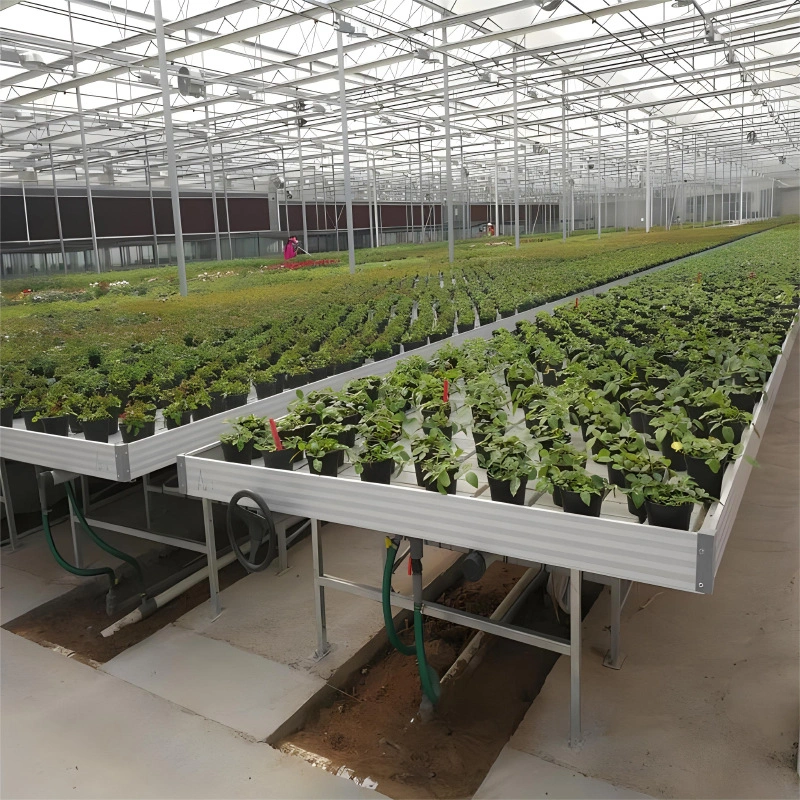
Tidal cultivation, also known as tidal hydroponics, is revolutionizing modern vegetable farming. This advanced soilless farming technology mimics natural tidal phenomena: nutrient solution flows through plant roots like tides and then returns to the nutrient tank, cycling repeatedly at fixed intervals. By integrating water, nutrient, and air supply, tidal cultivation enhances resource efficiency, simplifies operations, keeps root zones cleaner, and accelerates plant growth—making it one of the most effective methods for growing hydroponic vegetables.
I. Efficient Nutrient Tank Construction
The nutrient tank is sized according to the cultivation area, typically holding 60–75 tons per hectare. A water pump supplies nutrient solution to the cultivation tanks via inlet pipes. Excess solution flows back to the nutrient tank through drain pipes for recycling. Pump operation is controlled by intelligent devices, enabling fully automated, high-efficiency hydroponic irrigation.
II. Versatile Cultivation Tanks
Cultivation tanks can be made from cement or plastic film, usually 1–1.2 meters wide and 20 cm deep. Inlet pipes are installed at higher points, and drain pipes at lower points. Arch-shaped frames (1 m tall) are covered with black-white film. A 3 cm-thick sponge layer at the tank bottom supports seedlings and roots, ensuring even growth for tidal hydroponic vegetables.
III. Flexible Cultivation Methods
Seedling cultivation: Seedlings are fixed directly on the sponge layer.
Root cultivation: Roots are spread evenly in the tank and covered with a thin sponge layer.
IV. Smart Cultivation Workflow
After seedlings or roots are established, the pump activates to supply nutrient solution to the cultivation tank. When the liquid reaches the sponge layer, the solution flows back to the nutrient tank, completing a cyclic tidal irrigation system. In summer, pumps typically run every 10–20 minutes for 10 minutes each cycle, delivering precise water, nutrients, and oxygen to roots.
The black-white film blocks light, promoting vigorous growth and producing hydroponic vegetables that are whiter, tenderer, crisper, and cleaner. The result is premium-quality produce with rich nutrition and smooth texture.
V. Technical Advantages of Tidal Hydroponics
Tidal cultivation is suitable for a wide range of crops:
Vegetables: water celery, pak choi, oilseed rape, Chinese cabbage, baby bok choy, clover, amaranth, chrysanthemum greens, water spinach, shiso, endive, yellow chives.
Seedlings: bean sprouts, wheat sprouts, radish sprouts, buckwheat sprouts.
It can be deployed in greenhouses, rooftops, indoor/outdoor spaces, areas with or without soil, and small plots. This system operates year-round, regardless of temperature or region, making it accessible and scalable for urban hydroponic farming.
VI. Multiple Benefits of Tidal Cultivation
1. Resource Efficiency
No plowing, crop rotation, or pesticides needed.
Cyclic irrigation and fertilization save water, labor, and costs.
Short production cycles without extra temperature, light, or CO₂ control.
2. High Yield & Profit
Lowest infrastructure cost compared to soil, substrate, hydroponic, and aeroponic systems.
Maximum yield: Supports “excessive growth” in low-light conditions for continuous multi-crop harvesting.
Premium price: Cleaner, more attractive, tender, and nutrient-dense vegetables command higher market prices.
3. Premium Quality
Pesticide-free, herbicide-free, and hormone-free.
Isolated from air pollution.
Produces tender, juicy, and refreshing organic hydroponic vegetables.
Conclusion
Tidal cultivation represents a breakthrough in high-yield hydroponics and soilless farming. By integrating water, nutrients, and air delivery, it produces nutritious, clean, and visually appealing vegetables, while optimizing resources and profits. This technology is transforming urban and controlled-environment agriculture, offering farmers scalable, sustainable, and highly profitable solutions.
Keywords: tidal cultivation, tidal hydroponics, hydroponic vegetables, soilless farming, high-yield hydroponics, controlled-environment agriculture
Related products:
Views: 1