

Ebb-and-Flow Cultivation Technology: A High-Yield, Resource-Efficient Solution for Modern Agriculture

Introduction
As modern agriculture continues to pursue higher productivity, better quality, and greater sustainability, Ebb-and-Flow Cultivation has emerged as an innovative soilless growing technology. By simulating natural tidal movement, nutrient solution periodically floods and drains through the root zone, providing plants with an ideal balance of water, nutrients, and oxygen.
Compared with traditional hydroponic systems, ebb-and-flow cultivation significantly improves resource utilization, simplifies crop management, and promotes healthier plant growth while reducing production costs.
How Ebb-and-Flow Cultivation Works
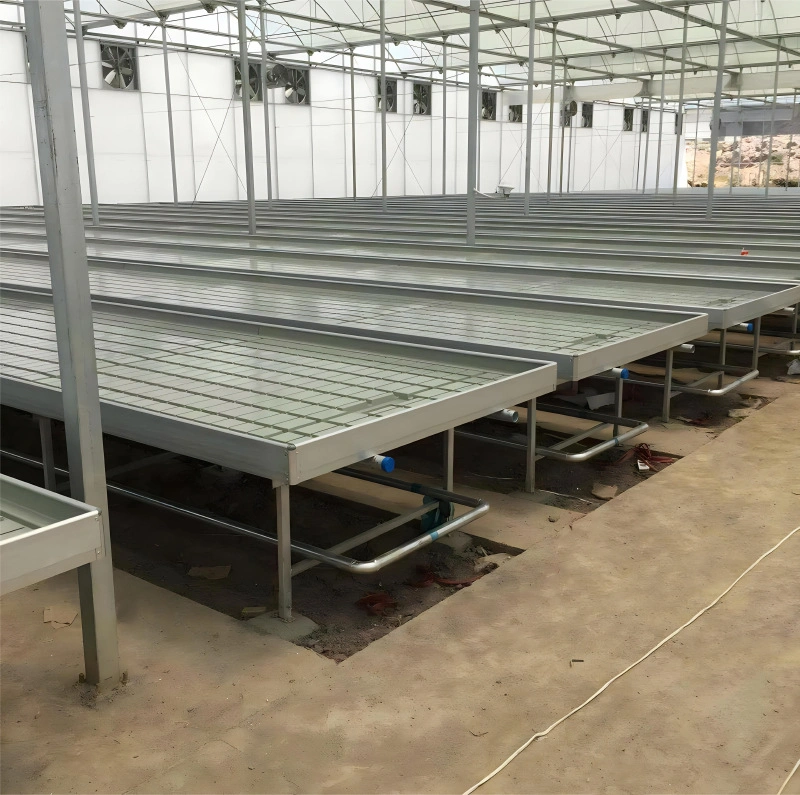
The system operates through repeated flooding and draining cycles. Nutrient solution is pumped from a storage reservoir into cultivation beds, allowing plant roots to absorb water and nutrients. Once the nutrient level reaches the designated height, excess solution returns to the reservoir by gravity and is reused in the next cycle.
This continuous circulation ensures efficient delivery of water, fertilizer, and oxygen while maintaining a clean and healthy root environment.
System Components
Nutrient Storage Tank
The nutrient reservoir serves as the heart of the system. Its capacity is generally designed at 60–75 tons per hectare according to the cultivation area.
The tank includes:
- Nutrient solution reservoir
- Water circulation pump
- Supply pipelines
- Drainage return pipelines
- Intelligent automatic controller
The controller automatically manages pump operation, ensuring precise irrigation cycles and consistent nutrient delivery.
Cultivation Beds
Cultivation beds can be customized according to greenhouse layout and production requirements.
Standard specifications include:
- Width: 1.0 m – 1.2 m
- Depth: 20 cm
- Bed bottom lined with 3 cm sponge mat
- Black-and-white film covering system
- Arch supports approximately 1 m in height
The black-and-white film creates a sealed growing environment that blocks external light and promotes uniform crop development.
Planting Methods
The system supports multiple cultivation methods:
Seedling Transplanting
Young seedlings are directly transplanted onto the sponge mat for rapid establishment and growth.
Bare-Root Cultivation
Bare-root plants are evenly distributed across the cultivation bed and lightly covered with sponge material to encourage root development.
Key Advantages of Ebb-and-Flow Cultivation
1. Water and Fertilizer Saving
The closed-loop circulation system recycles nutrient solution continuously, greatly reducing water consumption and fertilizer waste.
2. Labor Reduction
Automatic irrigation and nutrient management minimize manual operation and improve production efficiency.
3. Faster Plant Growth
Frequent oxygen replenishment around the root zone stimulates healthy root development and accelerates crop growth.
4. Clean and Pest-Free Production
The enclosed cultivation environment reduces exposure to pests, diseases, and airborne contaminants, minimizing the need for pesticides and herbicides.
5. Flexible Installation
The system can be installed in:
- Greenhouses
- Open fields
- Rooftops
- Vacant land
- Areas with poor soil conditions
It can operate year-round regardless of seasonal temperature fluctuations.
Suitable Crops
Ebb-and-flow cultivation is suitable for a wide range of leafy vegetables and specialty crops, including:
- Water spinach
- Endive
- Baby bok choy
- Chives
- Water dropwort
- Fish mint
- Toona sinensis
- Pea sprouts
- Radish sprouts
- Barley sprouts
- Buckwheat sprouts
The technology is particularly effective for producing high-quality blanched vegetables with tender texture and premium market value.
Production Benefits
Resource Conservation
The system offers significant sustainability advantages:
- No soil cultivation required
- No continuous cropping obstacles
- Reduced pesticide and herbicide use
- Automated nutrient recycling
- Lower labor requirements
- Reduced water consumption
- Shorter production cycles
High Yield and Profitability
Compared with traditional soil cultivation, substrate culture, NFT systems, and aeroponics, ebb-and-flow cultivation provides:
- Lower initial investment
- Lower operating costs
- Higher crop productivity
- Multiple harvest opportunities
- Improved product quality
- Greater market competitiveness
Premium Product Quality
Vegetables grown in the system are characterized by:
- Clean appearance
- Tender and crisp texture
- Rich nutritional value
- Reduced chemical residues
- Enhanced food safety
These qualities make the produce highly attractive to consumers seeking premium fresh vegetables.
Future Prospects
With increasing demand for sustainable and efficient food production, Ebb-and-Flow Cultivation is becoming an important solution for modern commercial farming. Its combination of resource efficiency, low operating costs, high yields, and premium product quality provides growers with a practical and profitable pathway toward future agricultural development.
As the industry continues to embrace smart farming technologies, ebb-and-flow systems are expected to play an increasingly significant role in greenhouse vegetable production and controlled-environment agriculture worldwide.
Related product:
Views: 11