

Vertical Cultivation Systems Overview

Vertical Cultivation System
A Vertical Cultivation System is an advanced farming method that maximizes space utilization by growing crops vertically rather than horizontally. A Vertical Cultivation System can significantly increase planting density, improve resource efficiency, and support modern greenhouse and urban agriculture projects.
Vertical cultivation includes several types, such as flat multi-layer vertical cultivation, tower-type vertical cultivation, cylindrical vertical cultivation, polyhedral vertical cultivation, wall-type vertical cultivation, and integrated double-sided vertical cultivation. Each Vertical Cultivation System offers unique advantages depending on the crop type, available space, and cultivation objectives.
I. Flat Multi-layer Vertical Cultivation
Flat multi-layer cultivation is one of the most common forms of a Vertical Cultivation System. By expanding upward into multiple growing layers, growers can substantially increase the effective planting area. Each additional layer increases cultivation capacity, making this Vertical Cultivation System highly suitable for commercial greenhouse production.
Materials
The following materials are typically required:
- 3 cm × 4 cm square steel tubes
- 3 cm × 3 cm angle steel bars
- Extruded polystyrene (XPS) boards (2 m × 60 cm × 3 cm)
- White agricultural film
- Hydroponic growing foam blocks
Example material requirements:
- 4 pieces of 3 m square steel tubes
- 6 pieces of 4 m angle steel bars
- 6 pieces of 60 cm angle steel bars
- 12 pieces of 60 cm XPS boards
- White agricultural film (5 m × 2 m)
- Hydroponic foam blocks
Fabrication Process
1. Frame Construction
Square steel tubes serve as the vertical supports of the cultivation rack. Angle steel bars are welded horizontally between the supports to form growing layers.
Specifications:
- Rack height: 4 m
- Rack width: 60 cm
- Layer spacing: 80 cm
- Ground clearance: 50 cm
2. Hydroponic Nutrient Ponds
Construct three nutrient ponds on each cultivation level using XPS boards. Line each pond with white agricultural film and fill with nutrient solution.
3. Planting
Place floating foam boards with pre-drilled planting holes on the nutrient solution surface. Seedlings are inserted into the holes, completing the planting process.
Production Workflow
Material Preparation → Frame Fabrication → Nutrient Pond Construction → Planting
This Vertical Cultivation System can also be adapted into:
- Multi-layer NFT channel cultivation
- Multi-layer pipe cultivation
- Multi-layer vertical column cultivation
- Multi-layer substrate gutter cultivation
II. Tower-type Vertical Cultivation
Tower-type cultivation, also known as pyramid cultivation or A-frame cultivation, is another efficient Vertical Cultivation System designed to maximize growing space while maintaining excellent irrigation efficiency.
Materials
Support Materials
- Stainless steel square tubes
- PVC pipes
Cultivation Materials
- Extruded polystyrene boards
- Sponge blocks (4 cm × 2.5 cm × 2 cm)
Irrigation Materials
- PVC water supply pipes
- Pipe fittings
- Capillary tubes
- Anti-drain valves
- Micro sprinklers
Fabrication Process
1. Support Frame Construction
Construct A-shaped frames using either stainless steel square tubes or PVC pipes.
Specifications:
- Height: 2 m
- Inclination angle: 65°
2. Mist Irrigation System
Install Φ25 mm PVC irrigation pipes on the upper portion of the frame.
Key specifications:
- Hole spacing: 80 cm
- Hole diameter: 4.5 mm
- Capillary tube length: 2–50 cm
The irrigation system consists of:
- PVC pipes
- Connectors
- Capillary tubes
- Anti-drain valves
- Micro sprinklers
3. Cultivation System
Drill planting holes into the XPS boards with a spacing of 20–30 cm. Secure the boards to both sides of the A-frame support.
Benefits include:
- Reduced nutrient loss
- UV protection for roots
- Prevention of algae growth
- Nutrient recycling
- Improved root oxygenation
This Vertical Cultivation System is particularly suitable for leafy greens, herbs, and strawberries.
III. Wall-type Vertical Cultivation
Wall-type cultivation utilizes vertical wall surfaces as growing areas, creating a space-saving Vertical Cultivation System for urban agriculture.
Structure
Install an extruded foam board approximately 10 cm away from the wall surface.
Components include:
- Foam cultivation board
- Nutrient supply pipe
- Atomizing micro sprinklers
- Planting holes
Working Principle
Nutrient solution is atomized and delivered directly to the root zone, supplying:
- Water
- Nutrients
- Oxygen
simultaneously.
This Vertical Cultivation System promotes rapid plant growth while making efficient use of otherwise unused wall space.
IV. Cylindrical Vertical Cultivation
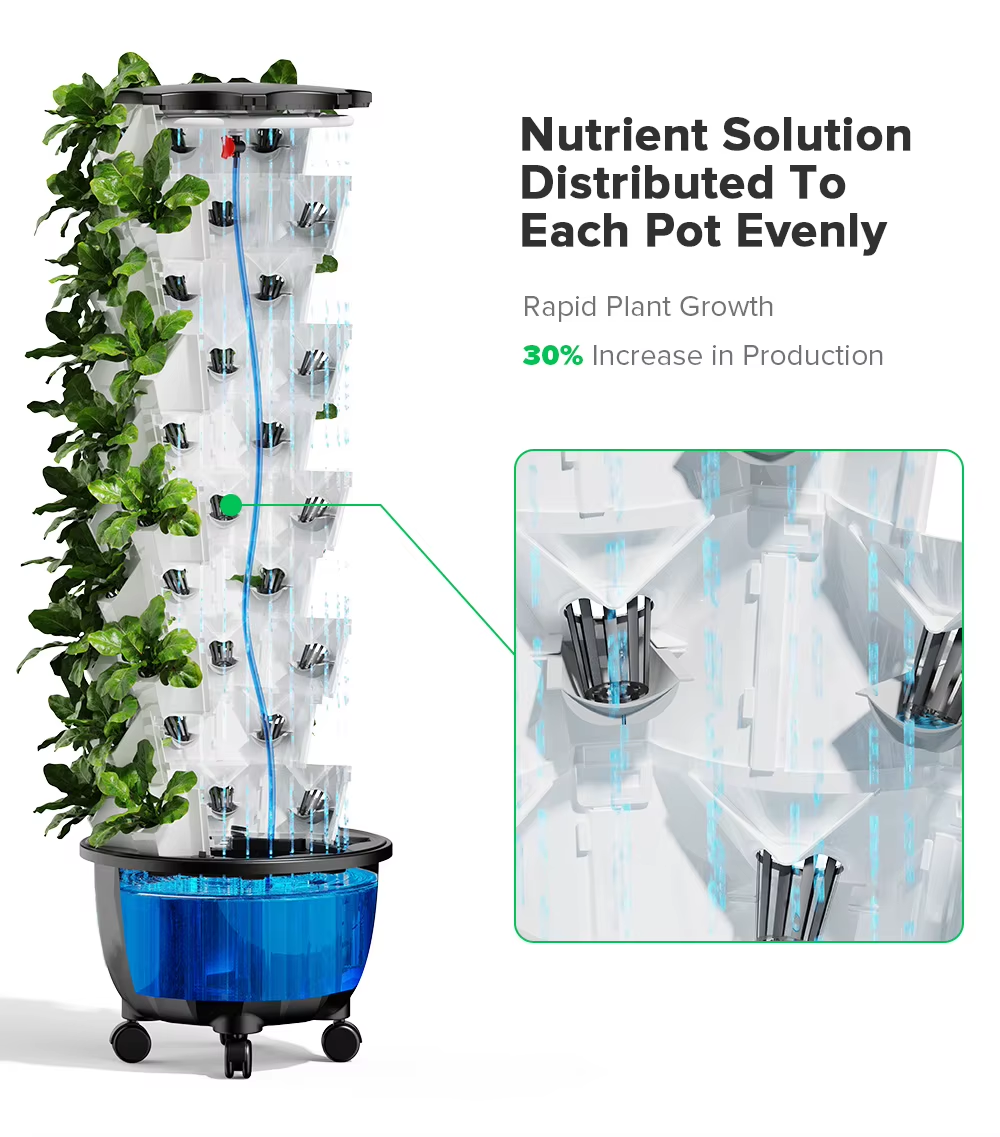
Cylindrical cultivation is one of the most innovative forms of a Vertical Cultivation System. Plants are grown around cylindrical cultivation towers, allowing 360-degree production capacity.
Applications
Home Gardening
A single cultivation tower can provide fresh vegetables directly at home.
Rooftop and Balcony Farming
Suitable for urban agriculture projects where ground space is limited.
Public Landscaping
Widely used in:
- Parks
- Street gardens
- Community landscapes
- Roadside green belts
Advantages
- Extremely high space utilization
- High crop productivity
- Efficient water use
- Attractive landscape appearance
- Suitable for smart agriculture
Today, this Vertical Cultivation System is considered one of the leading solutions for plant factories and controlled-environment agriculture.
Conclusion
A Vertical Cultivation System provides an effective solution for modern agriculture by maximizing production within limited space. Whether using flat multi-layer structures, tower-type frames, wall-mounted systems, or cylindrical cultivation towers, each Vertical Cultivation System helps improve yield, resource efficiency, and sustainability. As greenhouse technology and urban farming continue to develop, the Vertical Cultivation System will play an increasingly important role in future food production.
Related products
Views: 18